Big Bear Weekend Getaway Guide for First Time Visitors
Travel Guide · First Visit
Big Bear Weekend Getaway Guide for First Time Visitors
If this is your first trip to Big Bear, welcome. You’re going to like it.
Big Bear Lake sits in the San Bernardino Mountains at about 6,750 feet, two hours from downtown Los Angeles, and is one of the more useful surprises in Southern California. You drive an hour and a half through desert and canyons, the road climbs, the air cools, the trees get tall, and somehow you’re in a mountain town. Pine forest, alpine lake, four real seasons. It’s the closest thing LA has to Tahoe without flying anywhere.
A weekend is enough time to do it right, if you know what to do. This is the guide we wish someone had handed us our first time.
Quick Take
- Distance from LA: About 2 hours. Longer on Friday afternoon and Sunday afternoon.
- Elevation: 6,750 ft. Drink more water than you think you need.
- Easiest first season: Summer. Fall is the most underrated. Winter is the most dramatic. Pick your priority.
- Two main drive routes: Highway 18 (scenic, slower, icy first in winter) or Highway 38 (easier, less dramatic, better in winter).
- Worst time to drive home: Sunday at 3 PM. Leave by noon or wait until after 7.
- Pick three things you want to do. A weekend is two and a half days. Leave space around them.
First, the basics
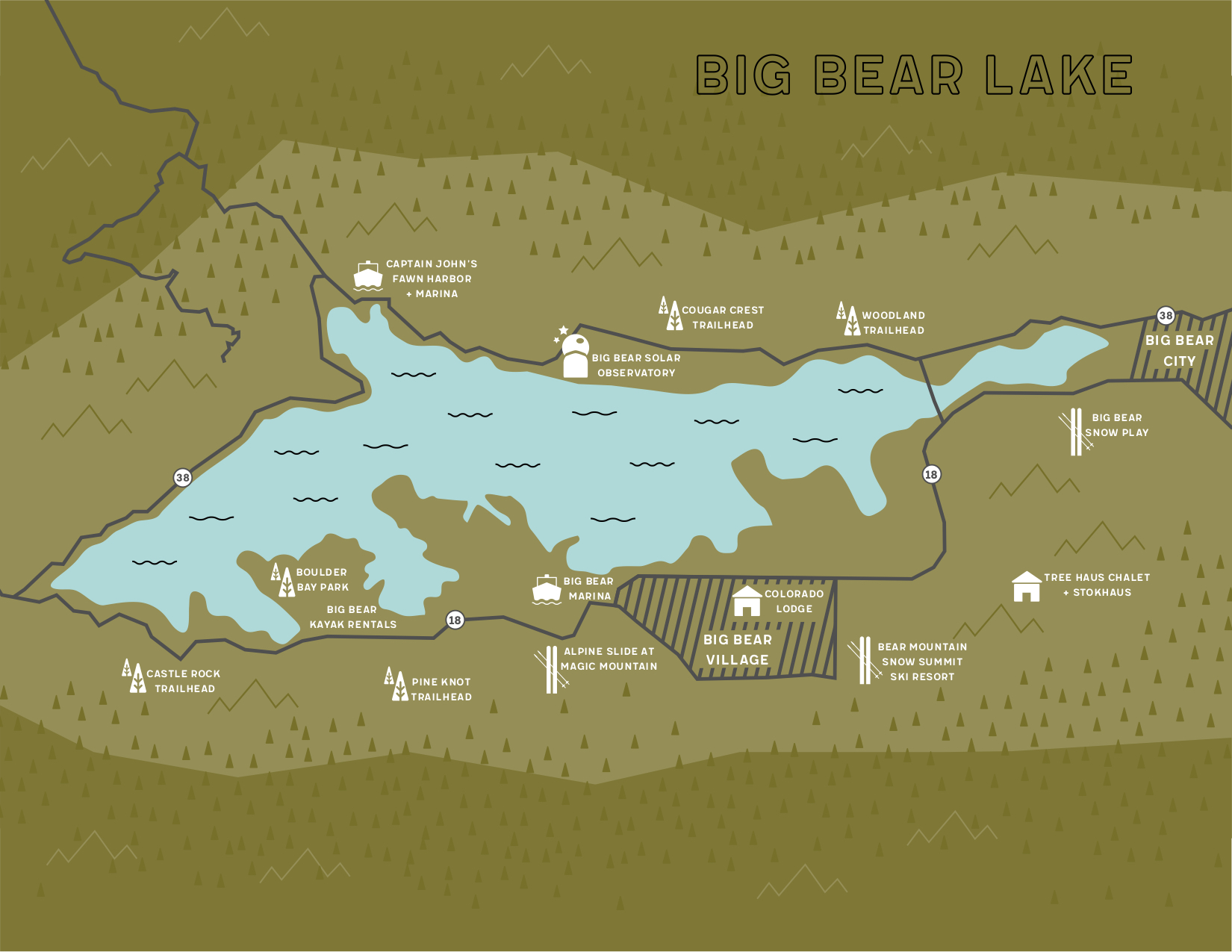
Big Bear is two towns next to each other. Big Bear Lake sits on the south shore, where the Village is, where the ski resorts are, where most visitors stay. Big Bear City is to the east, more residential, with the airport and a lot of the off-road trailheads. Most first-time weekenders are headed to Big Bear Lake, and that’s where Colorado Lodge is too.
The lake is a seven-mile-long alpine reservoir. Snow Summit and Bear Mountain are the two ski resorts, owned by the same operator, and they share lift tickets in winter. In summer, the bike park runs out of Snow Summit. The Village is a walkable downtown with restaurants, ice cream, breweries, and shopping.
It snows here in winter. It’s perfect in summer. Spring is unpredictable. Fall is underrated.
When to come
Every season has something going for it.
- Winter (December through March) is ski and snowboard season. The slopes are small by Tahoe or Colorado standards, but the snowmaking is dialed and the lift lines move. Holiday weekends are packed. Midweek is the sweet spot.
- Spring (April through May) is shoulder season. Ski operations wind down, summer activities haven’t fully started, rates drop, and the crowds thin out. If you want a quiet weekend, this is it.
- Summer (June through August) is peak. Lake days, hiking, mountain biking, long evenings. Book early. Fourth of July is the busiest weekend of the year.
- Fall (September through November) is the locals’ favorite. The aspens turn yellow against the pines, the lake is still warm enough to swim in early September, and the weekday traffic is gone.
For a first visit, summer is the easiest sell. Fall is the most underrated. Winter is the most dramatic. Pick your priority.
The drive up
Most people come up from LA, San Diego, or Orange County. From LA you’re looking at about two hours. From San Diego, closer to two and a half or three. Orange County splits the difference. Two main routes once you get into the mountains:
- Highway 18 (the “Rim of the World”) climbs through Crestline and Lake Arrowhead before reaching Big Bear. Slower, more scenic, more turns. This is the postcard drive. It’s also the route that gets icy first in winter.
- Highway 38 comes up through Redlands and Mentone. Less dramatic, but generally easier driving. Often the better choice in winter, or if anyone in the car gets carsick on switchbacks.
If you’re driving up from San Diego, take I-15 north and pick your highway from there. I-15 to Highway 18 (via the Cajon Pass) is the most common route. I-215 to Highway 38 is the better winter call and adds maybe fifteen minutes.
A few drive notes:
- Friday afternoons are slow going up. Sunday afternoons are slow going down. If you can leave by mid-morning Friday or wait until evening to head home Sunday, you’ll save yourself an hour or more, whether you’re starting in LA, OC, or San Diego.
- In winter, check chain control before you leave. Both highways can require chains in heavy snow even for AWD vehicles, and the requirement can change mid-drive. CalTrans posts updates.
- Gas up before you start the climb. Big Bear gas runs more expensive than down the hill.
Where to Stay in Big Bear
You’ve got options. Chain hotels in town, generic rental cabins, lakefront condos, or a small handful of design-forward boutique stays.
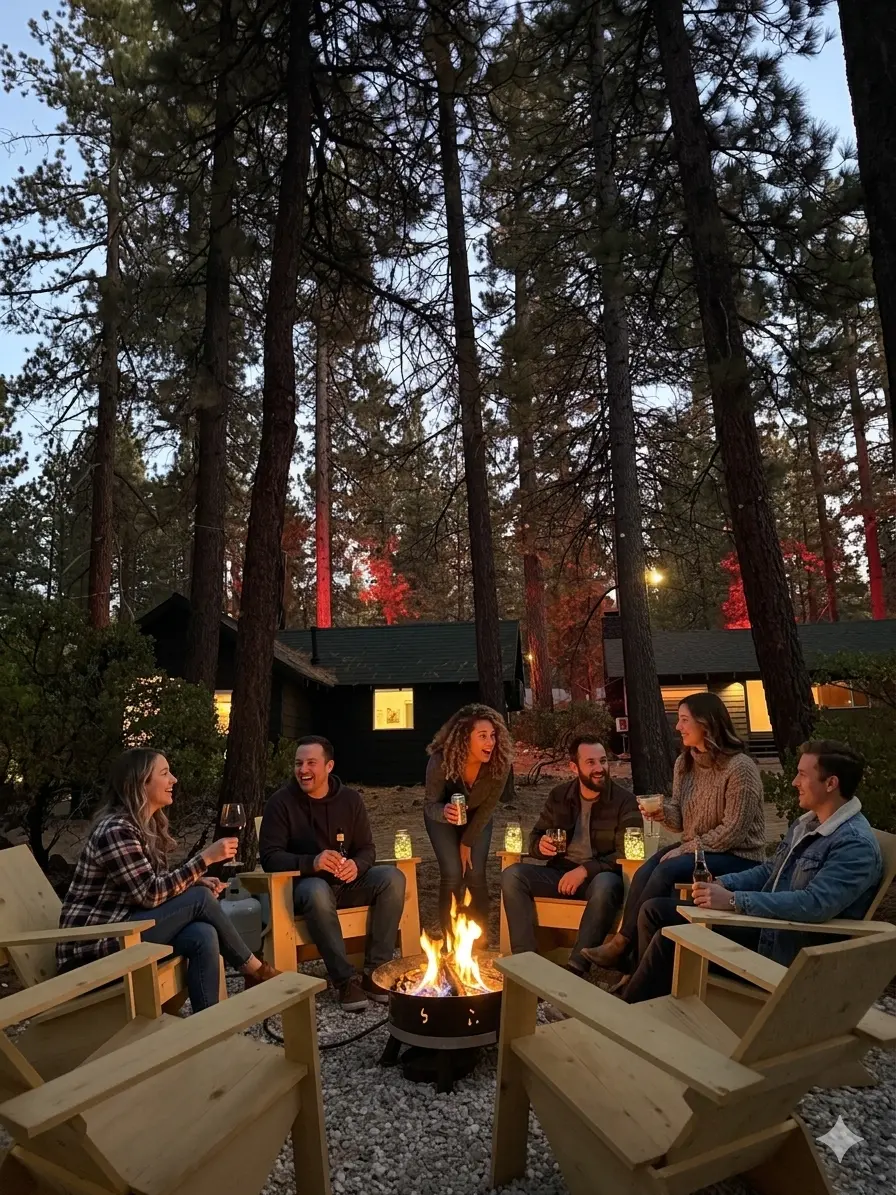
If you want to do this trip well, Colorado Lodge is the easy answer. Six modern cabins on two acres of pine forest, less than a mile from Snow Summit and Big Bear Village. Nordic-minimalist design, big windows, light-filled interiors, no clutter. Every cabin has air conditioning, which is genuinely rare in Big Bear (most cabins skip it). Every cabin is pet-friendly, two pets per cabin, dogs and cats both welcome. Hot tubs, a yoga deck, a community fire pit, and 24-hour real human guest service, not chatbots.
A quick read on which of our cabins fits which weekend:
- C2 / Sleep Inn: small group or family, full kitchen, sleeps four to six.
- C3 / Stay Awhile: couples or pairs, kitchenette, outdoor pizza oven.
- C4 / Colorado Lodge: romantic pick, wood-burning fireplace, private hot tub, clawfoot tub in the master.
- C5 / Small + Mighty: compact and charming, outdoor pizza oven.
- C6 / The Place Beyond The Pines: dog people, private fenced yard, private hot tub.
- C7 / Nocturnal Beauty: sleeps four with a sleeper sofa, deep soaking tub.
What to actually do your first weekend
Don’t try to do everything. You’ll burn out and miss the point. Here’s a tight first-time list, by season.
Summer and fall
- Spend a half-day on the lake. Pontoon rentals are easy and let you see the whole shoreline. Kayaks and paddleboards if you’d rather work for it.
- Pick one hike. Castle Rock is short, steep, and rewards you with a postcard view. Cougar Crest is longer and gentler. Pine Knot is in between. We’ll point you at the right one for your group at check-in.
- Walk the Village in the late afternoon. Get an ice cream. Check out a brewery. Wander.
Winter
- Pick one resort. Snow Summit for cruising and easier terrain, Bear Mountain for park and steeper runs. They share tickets. Don’t try to do both in a weekend.
- Take a snowy walk somewhere quiet. Pine forest in fresh snow is one of the better experiences in Southern California.
- Get into a hot tub. If you’re staying with us, the community hot tub is a few steps from your cabin door.
Any season
Have one slow morning. Coffee on the deck, a slow breakfast, no schedule. The whole point of a weekend in the mountains is that you’re not in a hurry.
Where to eat
The Village has the highest concentration of restaurants. Casual American, Mexican, sushi, pizza, breweries, coffee shops. The lake-adjacent spots have the views. Reservations matter on weekends in summer and during winter holidays. We’ve got current favorites at the front desk and we update them as places change.
If you want to cook, the local grocery stores will get you mostly there for a weekend. Stocking up in town before the climb is also fine and often cheaper. C2 and C4 have full kitchens. C3, C5, and C6 have kitchenettes. C7 has a four-burner gas cooktop. Every cabin has a charcoal BBQ outside.
Things first-timers get wrong
A short list of mistakes worth avoiding.
- Underestimating the altitude. Big Bear is nearly 7,000 feet. You’ll feel it the first day. Drink more water than you think you need, take it easy on alcohol the first night, and your second day will be much better.
- Overpacking the schedule. A weekend is two and a half days. Pick three things you want to do and leave space around them. Mountain trips are about pace.
- Forgetting layers. Mornings and evenings are cold even in July. A light jacket is non-negotiable. In winter, dress like you mean it, even if the forecast looks mild.
- Driving home Sunday at 3 PM. This is the worst possible time. Either leave by noon or wait until after 7 PM. Your weekend will end better either way.
- Skipping the slow stuff. Big Bear isn’t Vegas. The whole point is to slow down. Build in deck time, fire pit time, hot tub time, just-sitting time. That’s where the trip actually happens.
A sample first-time weekend
Here’s how a lot of our guests structure their first visit. Adapt to taste.
- Friday: Leave LA mid-morning, beat the afternoon traffic. Arrive in Big Bear by early afternoon. Check in at Colorado Lodge, drop bags, take a slow walk through the Village. Dinner in town. Fire pit and hot tub back at the cabin.
- Saturday: Slow morning on the deck. Mid-morning hike or lake activity. Late lunch in the Village. Afternoon nap or downtime back at the cabin. Cook dinner in or head out one more time. Stargaze before bed.
- Sunday: Coffee on the deck. One last short hike or a drive around the lake. Pack up. Lunch in town. Leave by noon to beat the southbound traffic, or stay through the afternoon and head down at sunset.
That’s the trip. It works.
What to pack
A short list, since first-timers tend to forget at least one of these.
- A warm layer for evenings, every season
- Sunscreen (you burn faster at altitude)
- Sunglasses
- Closed-toe shoes for hikes, even short ones
- A reusable water bottle
- A swimsuit (for the hot tub, year-round)
- Cash for tips and the occasional small business
- A phone charger for the car
- Tire chains in winter, even if you have AWD
Come See for Yourself
Big Bear is two hours from Los Angeles, twelve months a year, and built for the kind of weekend you’ve been needing. If you’re a first-timer, we’d love to host you.