The Design Story Behind Colorado Lodge
Stories · Behind the Build
The Design Story Behind Colorado Lodge
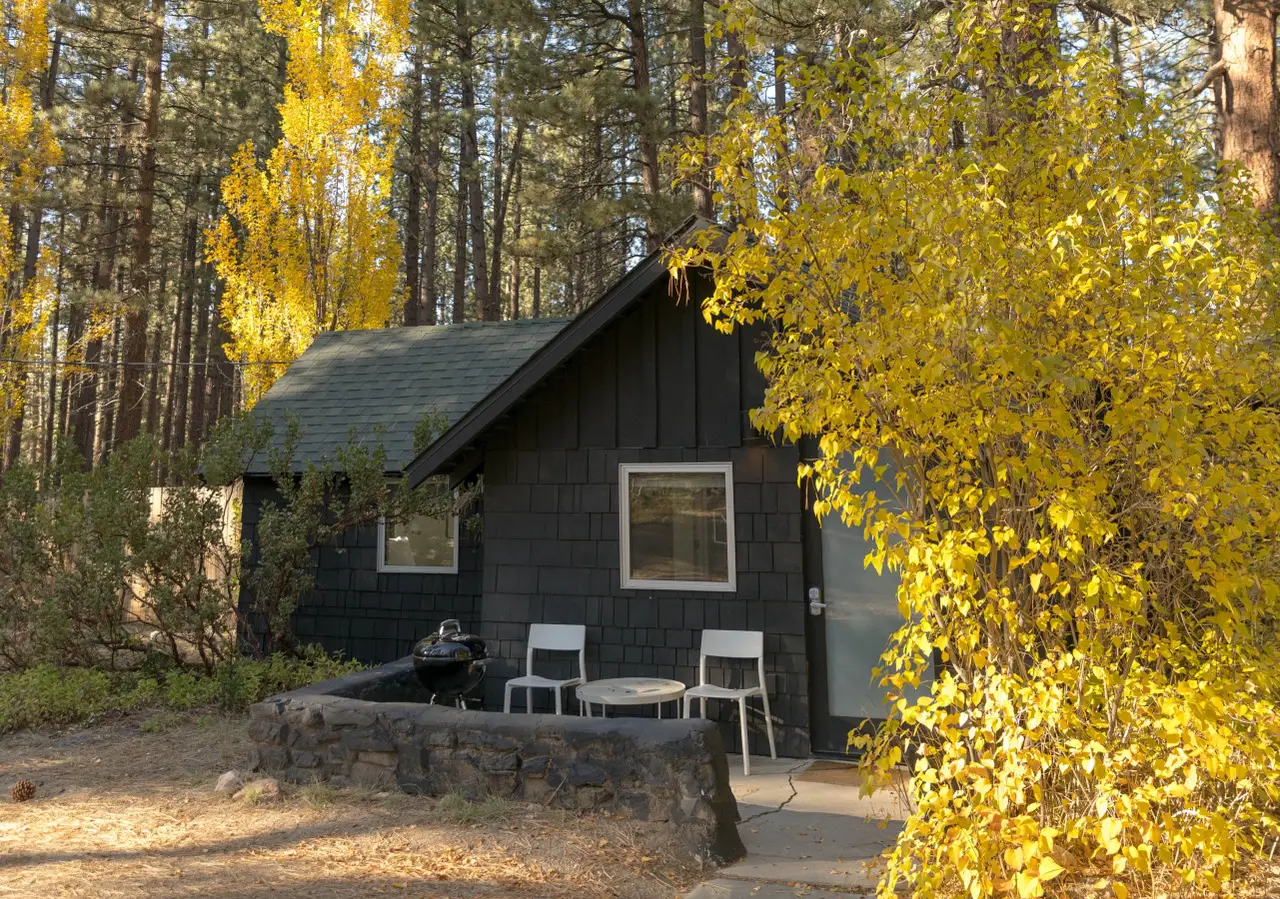
Most people who book a cabin at Colorado Lodge notice the same things first. The way the buildings recede into the pines instead of competing with them. The way the inside of a cabin feels nothing like the outside. The way the air in the bedroom feels dim and warm in the early morning, with a window framing the woods like a painting that’s still being made.
None of that is an accident. Colorado Lodge is the result of a long conversation between a piece of land, a small team of designers, and a refusal to do what most Big Bear cabins do. This is the story of how we ended up here, who helped us get there, and what we hope you feel when you walk in.
Quick Take
- The property: Six modern cabins on two acres of pine forest at 606 Jeffries Rd, in the heart of Big Bear Lake.
- The team: Colorado Lodge LLC (principals Marcus McInerney and Joel Sansone), with design and build partners Terremoto, EARL, and SheetrockLA.
- The signature move: Leave the existing exterior facades, paint every cabin black so the trees hold the visual weight, and rebuild the interiors from the inside out.
- The interior palette: Baltic birch lined walls, angular tile, custom built-in cabinetry, oversized windows, vaulted ceilings.
- The orientation: Nordic-minimalist. Restraint over decoration. A reprieve from city life.
It Started With the Land
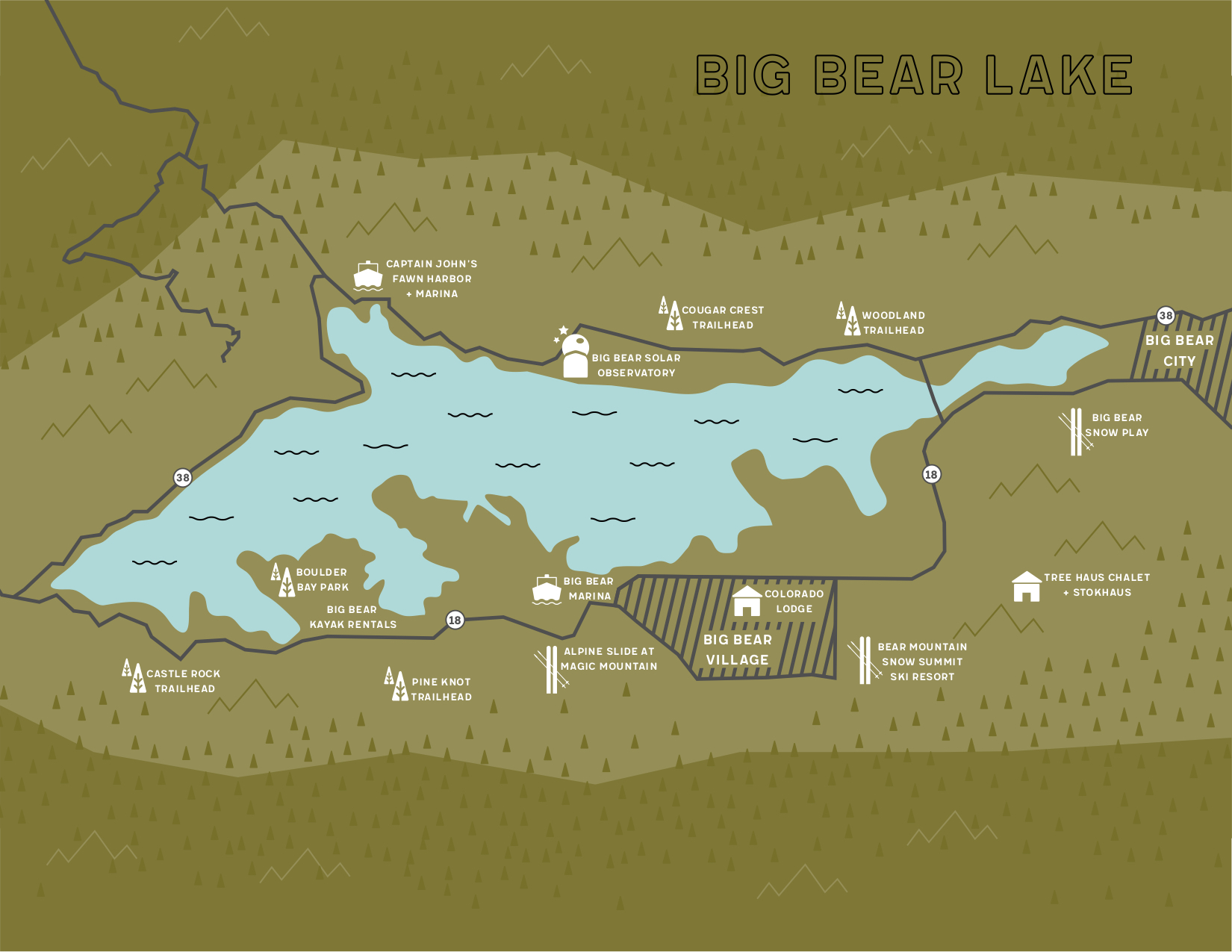
Colorado Lodge sits on a quiet residential street at 606 Jeffries Rd in Big Bear Lake. Two acres of pine forest. Less than a mile from Snow Summit and a short walk to Big Bear Village. By the standards of Big Bear cabin rentals, that combination is rare. By the standards of how the property feels when you’re on it, it’s the whole game.
Our About page tells the origin story plainly: “We crossed paths with this property, fell in love with the land, and after thoroughly not thinking through the magnitude of the project, purchased it. The cabins were in a terrible way, but the land is gorgeous and uniquely situated: pleasantly isolated yet close to everything. The sparks were there. And thus, the romance began.”
That last line is the part that matters. The land was the draw. Everything we built came from the question of how to live on that land without ruining it.
Neutralize the Exterior. Rebuild the Interior.
The most consequential design decision on the property was made early. The cabins themselves were not in good shape, but their footprints, their orientations to the trees, and the way they sat on the lot were all worth keeping. So instead of tearing them down or chasing a more conventionally rustic look, we did something more interesting.
We left the existing exterior facades intact. We neutralized them by painting every cabin black. And then we rebuilt the interiors from the inside out. The phrase we keep coming back to is “a new thing inhabits the shell of an old thing.”
The black exteriors do something specific. They let the pines win the visual contest. When you walk onto the property, your eye does not go to the buildings. It goes to the canopy, the light filtering through, the negative space between trunks. The cabins recede. That’s the point.
The interiors flip the rule. Inside any cabin, the rule is warm, bright, intentional. Plywood walls catch the light. Oversized windows turn the woods into wallpaper. Vaulted ceilings in some cabins open the space up vertically. The contrast between the dark, recessive exterior and the bright, generous interior is the architectural idea in a single sentence.
The People Who Built It
Colorado Lodge LLC is the entity behind the property. The principals are Marcus McInerney and Joel Sansone. Marcus gave the project most of its design direction and creative guidance. The general manager today is Bri Albrecht, who handles operations, hospitality, and the day-to-day rhythm of running six cabins as one boutique lodge.
The build came together through three design and build partners. The credit on the ArchDaily project writeup says it plainly: “Colorado Lodge by Terremoto + EARL + SheetrockLA.”
Terremoto · Landscape and beyond
Terremoto is a California landscape architecture studio founded by David Godshall and the late Alain Peauroi. Their practice is recognized for what they call “critical regionalism,” an unapologetically ecological approach that asks landscapes to respond to their place rather than impose a generic look. Their notable projects include Sea Ranch Lodge and the Test Plot native plant restorations across Los Angeles, and their work has been featured in Sunset, Wallpaper*, Gardenista, Dwell, and Architect’s Newspaper.
Recognition includes the 2023 Architectural League Emerging Voices Award, AD100 selection in 2021 and 2022, and the 2025 Cooper Hewitt National Design Award.
On Colorado Lodge, Terremoto shaped the landscape (the long fence that creates a compound within the forest, the wood partitions floating between trees, the way each building meets the pine canopy) and partnered closely with Marcus on interior design direction. The relationship between cabin and clearing was their work.
SheetrockLA · Architecture and build
SheetrockLA handled the architecture and build of the cabins themselves. Dezeen’s feature on the project, titled “SheetrockLA Renovates Cluster of Cabins in California Mountain Town,” credits them with the renovation. Their fingerprints are on the structural choices, the rebuild of each cabin, and the practical work of turning a beaten-up cluster of structures into something that holds up to guests year after year.
EARL · The third name on the project credit
EARL is the third party listed on the ArchDaily writeup alongside Terremoto and SheetrockLA. Their contribution to the project sits inside that shared credit.
The team today
Web design and digital marketing for Colorado Lodge are handled by Robert Goodman of Echo Designs and InnDojo Inc. The 24-hour guest service that shows up in nearly every five-star review is run by Bri and her team.
From the design team
“The place was a wreck when I found it, probate sale, long-term tenants, dust everywhere. But it had bones, and it had soul. We gutted every cabin and rebuilt it around one idea: what does modern mountain living actually look and feel like, without the knotty pine and carved bears? I want guests to walk in and feel the difference immediately, not just see it. Good design does that. It’s not decoration, it’s atmosphere.”
Marcus McInerney, principal · Colorado Lodge
The Materials
One of the press features most often cited about Colorado Lodge is the Hunker writeup, described on our press page as the Baltic Birch interiors feature. That gives you the headline material. The full list is shorter than you’d expect for an entire property build, which is part of the point.
- Baltic birch plywood lines the walls in most cabins. It’s a highly processed material but a natural one, and it echoes the towering pines just outside. The grain reads as forest from across a room.
- Angular tile appears in the kitchens and bathrooms, picked for geometry rather than ornament.
- Custom built-in cabinetry shows up throughout, so the storage feels like part of the architecture rather than furniture stacked against the walls.
- Oversized windows in every cabin frame the pines, the sky, and the light at different hours of the day. Some cabins (C4, C5) carry vaulted ceilings to extend the height up to the canopy.
- A clawfoot soaking tub sits in C4’s spa-bath master, with a floor-to-ceiling forest view.
- A redwood deck holds C4’s private hot tub on the back of the cabin, screened from the rest of the property by the pines.
What you do not see on this list: painted accent walls, decorative pattern, throw pillows in three competing palettes, the standard rustic-cabin material kit. The restraint is the point. A guest who books a different cabin on a return visit should feel like they’ve come back to a different room of the same house, not a different building.
The Landscape as a Room
The Terremoto contribution is most visible at the property level. A long fence creates a compound within the forest. Wood partitions float between trees. Decks, boardwalks, the yoga and meditation platform, the community fire pit lounge. Elemental amenities that suggest where to sit, where to walk, where to look up at the trees, but never insist.
The conceptual idea Terremoto worked toward is captured on our About page: “the property is a room inside the woods. You’re inside, outside.” On the most ambitious cabin (C6, The Place Beyond The Pines), this idea reaches its fullest expression. The cabin has its own private fenced yard, the only one on the property, with a private hot tub and a private fire pit inside the fence. The outdoor space is conceived as a continuation of the interior, not a separate yard.
From the operations side
“The reaction at check-in is almost always the same: guests walk in and just say wow. People ask who designed it and tell me they want their own home to look like this. ‘You can tell they really care’ comes up over and over. The C6 backyard gets mentioned on almost every check-in call, and what I notice most is the look on people’s faces when they arrive: relieved, ready to power down. A lot of guests are asking about their next stay before they’ve even left.”
Bri Albrecht, general manager · Colorado Lodge
An Ongoing Project
The About page closes with a paragraph we mean literally: “We’re always working on it. New structures, new ideas, new ways of blurring the line between shelter and forest. It will be a little different every time you come. That’s the point.”
What that has looked like in practice: simple, elemental additions over time. Decks. Boardwalks. Abstract platforms that don’t tell you what to do, only invite you to sit, lay, or look up. The property is not finished, and we don’t want it to be. The press coverage from 2019 (ArchDaily, Dezeen, Hunker) captured a moment in the build. The lodge today, and the lodge a year from now, will not be the same place those features wrote about. That continuity of revision is part of the design philosophy too.
What We Hope You Notice
Most of what we care about is invisible until you’re inside the cabin.
The way the morning light moves across a Baltic birch wall. The way a black exterior disappears into shadow under the canopy. The way a private fenced yard at C6 lets a dog be off-leash while you sit in the hot tub and lose track of time. The way C5, a 400 square foot studio, feels like more space than that because of one well-placed half-wall and a generous porch.
These are small choices. They are also most of the work. Guests have rated us 9.0+ across 1,272+ reviews on Airbnb, VRBO, Booking.com, and Expedia, with 91 percent of those reviews at five stars. One guest summed it up: “The design of the place makes you feel like you’re somewhere in Europe, but you’re two hours from LA, and you can be on a ski run in ten minutes.”
If you stay with us, we hope a few of those small choices land.
Come See It For Yourself
Six modern cabins, two acres of pine forest, one boutique lodge in Big Bear Lake. Book direct for the best rate.